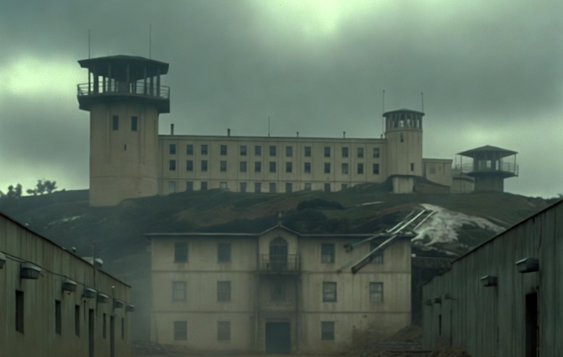
More than two decades after its release, The Rock continues to spark debate among movie fans. Beyond the explosions and iconic one-liners, a long-standing fan theory suggests something unexpected: Sean Connery’s character in The Rock may actually be the final chapter of his James Bond story.
At first glance, it sounds far-fetched. But when fans examined timelines, dialogue, and real-world history, the theory became surprisingly convincing.
The Theory in Simple Terms
The idea is that John Mason, Connery’s character in The Rock, is not a random former British operative — but a retired version of James Bond, operating under a cover identity.
Instead of being a reboot or parody, The Rock would act as an unofficial continuation of Connery’s Bond after his final official appearance in the 1970s.
Why the Name Is Different
One of the biggest objections to the theory is obvious:
his name isn’t James Bond — it’s John Mason.
Supporters argue that Bond frequently used aliases during missions. If he were captured while undercover, it would make sense that authorities processed him under a false identity. In The Rock, Mason is described as a man with no official records in either the United States or Britain, reinforcing the idea that the name itself is a cover.
The Timeline Surprisingly Works
According to the film, Mason was imprisoned in Alcatraz in the early 1960s and escaped shortly after. That period aligns closely with Connery’s first Bond film, Dr. No.
Fans suggest Bond could have been captured following that mission, escaped prison, and then continued his career as 007 in subsequent films. His final official Bond appearance, Diamonds Are Forever, even places him in the United States — geographically close to where Mason’s story resumes.
Why No One Came to Rescue Him
Another question often raised is why British intelligence would abandon one of its best agents.
Spy fiction has a simple answer: deniability. Intelligence agencies routinely deny captured operatives to protect larger interests. In many Bond films, loyalty to the mission outweighs loyalty to individuals — even Bond himself.
Connections to Real History
Supporters of the theory go further, linking events in The Rock to real historical timelines, including Cold War tensions and intelligence conflicts of the early 1970s. The theft of sensitive government files mentioned in the film fits neatly into that era of political distrust.
Even small details — like Mason’s age, mannerisms, and knowledge of espionage tactics — mirror Connery’s Bond almost too closely to dismiss.
Is This Official Canon?
No — and it never will be.
The producers of the Bond franchise have never confirmed the theory, and The Rock was not made as an official Bond film. Still, even the film’s director has acknowledged that Connery intentionally played Mason with a Bond-like presence.
That subtle performance choice is part of why the theory refuses to disappear.
Why Fans Love This Theory
This theory doesn’t rewrite history — it enhances it.
It allows fans to imagine The Rock as a graceful epilogue for Connery’s Bond: older, sharper, less glamorous, but still dangerous. Instead of contradicting the franchise, it adds an extra layer of enjoyment for viewers willing to connect the dots.
Final Thoughts
Whether you believe the theory or not, it highlights something powerful about cinema: great characters live beyond official canon.
Next time you watch The Rock, you might notice that John Mason doesn’t just feel like James Bond — he moves, talks, and thinks like him.
And sometimes, that’s more than enough.
TL;DR:
A long-running fan theory argues that Sean Connery’s character in The Rock is actually an older version of James Bond. When timelines and character details are compared, the theory becomes surprisingly plausible.